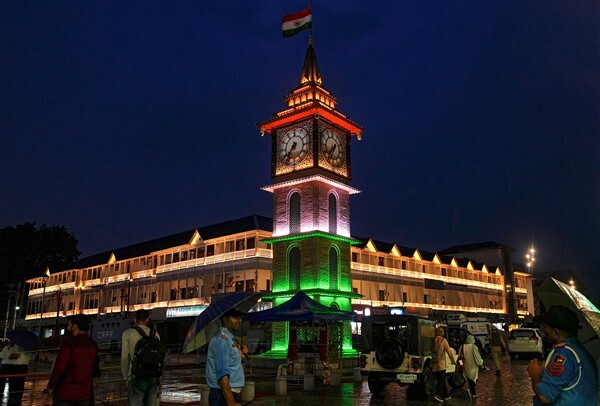
Accession Day: The Enduring Power of Unity and the Promise of a New Dawn
As the morning sun glows over the snow-draped peaks of the Pir Panjal and the gentle waters of Dal Lake shimmer beneath the tricolor, India pauses once more to commemorate a moment that defined its history — the accession of Jammu and Kashmir to the Union of India.
On October 26, 1947, Maharaja Hari Singh’s decision to sign the Instrument of Accession set the course for Jammu and Kashmir’s destiny within the Indian Union. Yet, more than seven decades later, this historic day continues to be more than a matter of legal or political consequence; it remains a reminder of the strength of India’s unity, the depth of its diversity, and the resilience of a region that has faced the most testing of times with dignity and resolve.
A Choice Made in the Crucible of Crisis
When Maharaja Hari Singh affixed his signature to the Instrument of Accession, India itself was barely two months old. The subcontinent had been scarred by the partition — millions displaced, communities divided, and faith tested. Amid this turmoil, Jammu and Kashmir found itself in the eye of a storm. Tribal militias, aided by forces across the newly drawn border, had invaded its frontiers, threatening the sovereignty of the princely state and the lives of its people.
It was in that moment of existential peril that the Maharaja made his fateful choice — to accede to India. The decision was both pragmatic and visionary. It enabled Indian forces to defend the state against invasion, but it also aligned Jammu and Kashmir with a nation founded on ideals of secularism, democracy, and pluralism.
This act was not simply a political document; it was a moral covenant — a commitment to the belief that India’s strength would lie not in uniformity, but in its embrace of differences.
A Legacy of Sacrifice and Continuity
The years that followed the accession were not without turmoil. The First Kashmir War of 1947–48 extracted a heavy price, both in lives and in lost opportunities. Yet, through these challenges, the bond between Jammu and Kashmir and the rest of India endured — sustained by shared sacrifice and a collective sense of belonging.
In the decades that followed, the region faced waves of conflict, militancy, and disillusionment. But at every stage, its people displayed extraordinary resilience. The farmers of Jammu, the artisans of Kashmir, the monks of Ladakh — each, in their own way, embodied the spirit of continuity that kept hope alive even in the bleakest of times.
Today, as we commemorate Accession Day 2025, it is this spirit — tested but unbroken — that deserves celebration.
A Region in Transition
The constitutional transformation of August 2019, which revoked Article 370 and reorganized the erstwhile state into two Union Territories, marked another turning point in Jammu and Kashmir’s post-independence journey. The move, described by the Union government as one of “integration and inclusion,” has ushered in a new phase of governance and development.
While debates about its political and constitutional dimensions continue, the ground realities reflect undeniable progress in areas such as connectivity, infrastructure, and grassroots empowerment. The construction of modern highways, tunnels, and rail links has brought remote areas closer to the mainstream. Investments in tourism and agriculture are generating livelihood opportunities, while educational and skill-development initiatives are equipping the youth to participate in India’s wider growth story.
The transformation is gradual but visible — in the bustling tourist season that now stretches across the year, in the revival of traditional crafts, in the voices of young entrepreneurs who are redefining ambition beyond boundaries of geography and history.
The Spirit of Accession in Contemporary Times
Accession Day, therefore, is not only a day of remembrance but also one of reaffirmation. It is a reminder that Jammu and Kashmir’s true identity lies not in division or discord, but in diversity and coexistence. The region’s cultural fabric — woven from the threads of Sufi mysticism, Dogra valor, Buddhist serenity, and Kashmiri artistry — mirrors India’s own pluralistic soul.
From Srinagar to Kishtwar, from Kathua to Kargil, the celebrations today reflect that essence. Lamps are lit, homes are decorated, and the air is filled with the strains of traditional music. These moments of joy, though symbolic, represent something profound — a collective assertion that the future of Jammu and Kashmir must be built on peace, participation, and shared purpose.
Youth and the New Imagination of Progress
It is perhaps the youth who best embody the promise of this new era. For a generation born in the shadow of conflict, the desire for stability and opportunity outweighs the pull of past grievances. Across the Valley and the plains, young men and women are turning to entrepreneurship, technology, sports, and creative expression. Start-ups, small enterprises, and local innovations are quietly reshaping the economic landscape.
The emphasis on grassroots democracy — through panchayat and urban body elections — has further deepened civic participation, giving communities a voice in shaping their own futures. The idea that governance must be inclusive, transparent, and accountable is gaining ground — a development that honors the very democratic principles enshrined in the Instrument of Accession.
From History to Hope
Yet, even as we look forward, the lessons of history must remain our guide. The accession of 1947 was a product of vision and courage, but also of necessity. Its endurance rests on the continued trust between the people and the institutions that govern them. The path to lasting peace in Jammu and Kashmir will depend not only on development projects but also on dialogue, empathy, and the recognition of the region’s unique cultural and emotional landscape.
India’s unity is strongest when it listens as much as it leads — when it engages with every citizen not as a subject of policy but as a partner in progress. That is the enduring message of Accession Day.
A Celebration of Continuity
As the evening descends over the Himalayas and the tricolor ripples in the crisp autumn wind, Accession Day reminds us that Jammu and Kashmir’s destiny has always been intertwined with that of India. The courage of 1947, the sacrifices of generations, and the aspirations of today’s youth together form a narrative of endurance and evolution.
The future that beckons is one of promise — where the valleys once known for strife can again be known for song, where opportunity replaces uncertainty, and where peace becomes not a privilege but a permanent state of being.
On this day, India does not merely celebrate the accession of a territory; it celebrates the affirmation of an idea — that unity, built on justice and inclusion, will always be the foundation of its strength.