
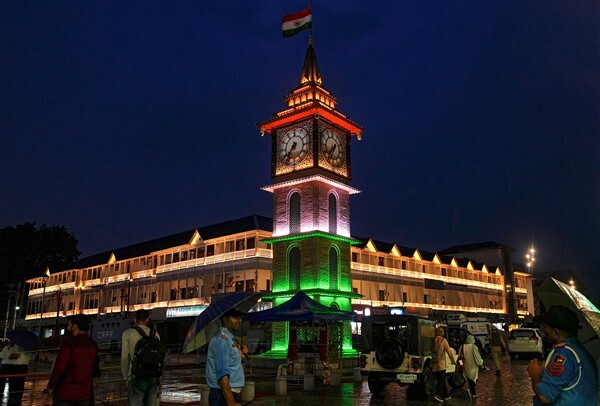
Republic Day in Kashmir: From Turmoil to Transformation
Republic Day in Kashmir today feels nothing short of a festival. The tricolour flutters freely, children participate in parades, schools remain open, markets function normally, and the air carries a sense of confidence and calm that was once unimaginable. This visible transformation stands in sharp contrast to the painful memories associated with Republic Day in Kashmir for decades after 1990, when the day symbolised fear, shutdowns, stone-pelting, communication blackouts, and countless hardships for ordinary citizens.
For years, Republic Day meant curfews instead of celebrations. Streets were deserted, educational institutions were shut, mobile networks snapped, and a sense of uncertainty loomed over every household. Students were forced to stay indoors for more than 200 days a year, their education repeatedly disrupted. Businesses suffered massive losses, daily wage earners were pushed to the brink of survival, and families lived with the constant anxiety of violence erupting at any moment. These were not isolated experiences but a collective reality endured by generations in Kashmir.
Today, however, the picture is markedly different. Schools function regularly, students are excelling in academics, sports, and innovation, and young minds are participating in national-level competitions with pride. Republic Day and Independence Day are celebrated with enthusiasm and dignity, reflecting a renewed sense of belonging and hope. The change did not occur overnight, nor was it accidental—it is the outcome of sustained efforts to restore peace, strengthen governance, and dismantle the ecosystem of fear that once dominated the region.
To truly understand the significance of this transformation, a stark introspection is necessary. What did Kashmir gain in the nearly three decades of turmoil since 1990? The honest answer is painful. Thousands of young lives were lost to a false narrative, many pushed into violence under the illusion of a promised freedom that never materialised. Bloodshed became routine, mothers lost their sons, families were torn apart, and an entire generation grew up amidst trauma and instability. Education suffered irreparable damage, economic activity collapsed, and the most precious asset of any society—peace—was lost.
This loss was not accidental. It was the result of a carefully orchestrated narrative driven by a few individuals who exploited emotions for personal and political gain. While the common people suffered, these self-styled leaders thrived, using chaos as a tool to keep their influence and coffers intact. The realities of these actors are now being exposed one after another, revealing the hollowness of their claims and the cost at which their agendas were pursued.
Ironically, in demanding a false version of freedom, Kashmir ended up losing even its statehood. Promises of autonomy and self-rule remained distant dreams, sacrificed at the altar of perpetual unrest. It is worth remembering moments from history when leaders from the power corridors of the country reached out, knocking on the doors of separatist leadership to initiate dialogue. Those doors remained shut, not in the interest of the people, but to preserve a climate of confrontation.
One cannot forget the words of former Prime Minister Atal Bihari Vajpayee, who once assured the people of Jammu and Kashmir that “the sky is the limit.” That statement reflected an openness to dialogue, development, and dignity within the constitutional framework of India. Yet, instead of capitalising on this opportunity, the so-called leaders chose to fuel chaos. Their strategy was simple: keep the streets burning so their relevance remained intact. The result was disastrous—far from achieving autonomy or self-rule, Kashmir slid deeper into isolation and instability.
The younger generation of Kashmir must now introspect honestly. There are still voices attempting to revive old narratives, trying to mislead youth by glorifying a past that only delivered loss. It is time to recognise that one entire generation was ruined by separatism and violence. We cannot afford to let another generation walk the same destructive path. The future of Kashmir lies not in slogans of division, but in education, innovation, economic growth, and peaceful coexistence.
True patriotism today means working wholeheartedly in alignment with national interests while preserving the unique cultural and social identity of Kashmir. It means rejecting radicalism and standing firmly against any element that seeks to disturb peace or revive separatist sentiment. The responsibility does not lie with institutions alone; it lies equally with the people. Long-lasting peace can only be established when society collectively isolates those who profit from instability and supports those who work for harmony.
On this Republic Day, it is imperative to acknowledge the immense sacrifices made by the heroes who ensured that peace could return to Kashmir. The Indian Army, Jammu and Kashmir Police, CRPF, and other paramilitary forces have paid the highest price so that the tricolour can fly high across the region. Their courage, discipline, and dedication have created the conditions in which normalcy could take root and festivals could once again be celebrated without fear.
Republic Day in Kashmir today is not merely a commemoration of the Constitution; it is a symbol of resilience, recovery, and resolve. It reminds us of the cost of being misled and the value of choosing peace over provocation. As India celebrates its Republic, Kashmir stands at a crossroads of opportunity—one where the mistakes of the past serve as lessons, and the promise of a stable, prosperous future becomes achievable.
On this Republic Day, let us honour the sacrifices, reject false narratives, and commit ourselves to a future where Kashmir flourishes as an integral, peaceful, and proud part of India. I extend my heartfelt wishes to the people of India—Happy Republic Day.

Related Posts
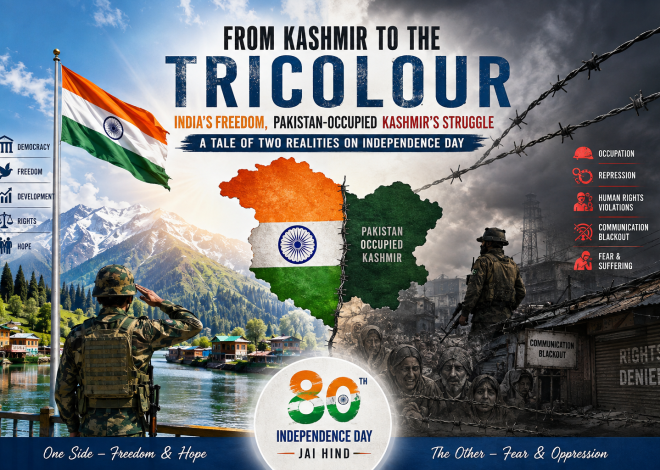
From Kashmir to the Tricolor: India’s Freedom, Pakistan-Occupied Kashmir’s Struggle — A Tale of Two Realities on Independence Day.

Barefoot to a Jail, Broken by a Lie: Kashmir’s Mothers and the Cost of False Freedom
